

 REQUEST FOR QUOTATION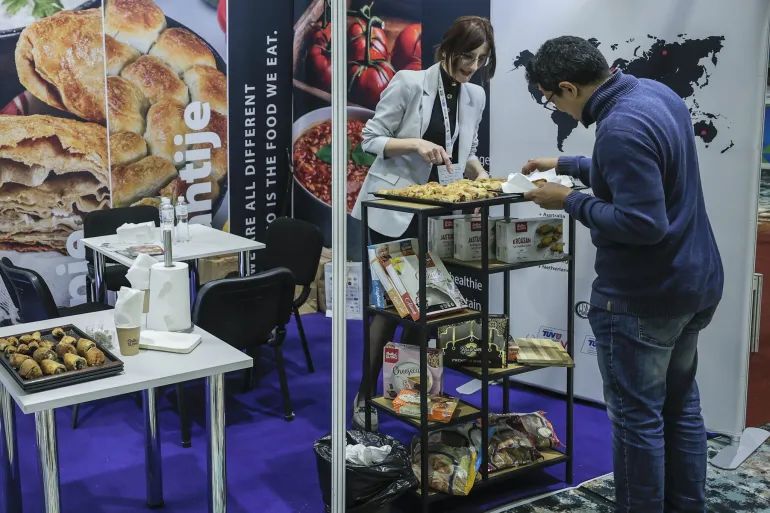
The Western Balkans has enormous potential for the development of the halal economy and tourism.
Slovenia, Serbia, Montenegro, Kosovo, North Macedonia and Albania are markets that lag behind Bosnia and Herzegovina and Croatia when it comes to the halal economy.
The Sarajevo Business Forum and Sarajevo Halal Fair, held in recent days, represent the most important regional business gatherings, especially when it comes to the halal economy. In parallel with the forums and the fair, the Congress on Halal Quality was held, which addressed this topic from a scientific perspective. Thanks to these events, Sarajevo year after year brings together more and more companies, business people, investors, statesmen, politicians and halal experts from the Balkans, the Middle East, Southeast Asia, the European Union and America.
Although the societies of the Western Balkans share a similar history through the Ottoman Empire, Austria-Hungary, and Yugoslavia, they have different levels of development of the halal economy, which reflects the development and socio-political influence of Islamic communities. The most drastic example is the difference in the influence of the Muslim population between Croatia, where 1.5 percent of Muslims have a significantly stronger influence than 20 percent of Muslims in Montenegro or almost a third of the population in North Macedonia.
BiH has the most regulated halal market
“Bosnia and Herzegovina represents the most regulated halal market in the region and Europe, and one of the most regulated halal markets in the world, and end consumers have great confidence in the halal status and quality of domestic products, which has enabled the export of halal-certified products to markets that require a halal certificate. The halal industry of Bosnia and Herzegovina is the most developed industry in the Southeast Europe region with 109 halal-certified companies that place around 7,000 products on the market,” says Dr. Damir Alihodžić, director of the Agency for Halal Quality Certification, which is headquartered in Tuzla and covers Montenegro and Serbia.
The halal quality standard is a key entry ticket to numerous world markets.
“Bosnian and Herzegovinian halal products are finding their place on supermarket shelves around the world. Our companies export to countries in the region, the EU, the USA, Canada, Australia, the UAE, Saudi Arabia, Russia, Azerbaijan, Malaysia and other countries. Accordingly, halal products from our area are of high quality, competitive and interesting to consumers, with the need to work further on promotion, branding and joint appearances in existing and new markets,” Alihodžić adds.
The Republic of Croatia has long recognized the strategic importance and potential of the halal economy in increasing exports, but also in attracting halal tourists. Thanks to its quality and significant capacities, the Croatian food industry is achieving ever greater exports to the Middle East and other halal markets.
“We are recording a constant increase in halal products and requests for certification of both products and services, conditioned by the constant growth of the halal market and the increasing number of tourists as well as the workforce. We are pleased that we have issued the first halal certificate for a polyclinic, thus launching the development of health tourism according to the requirements of the Halal standard,” said Dr. Aldin Dugonjić, head of the Centre for Halal Quality Certification.
“The further development of halal tourism and production competitiveness will certainly be contributed to by the Sustainable Tourism Development Strategy until 2030, prepared by the Ministry of Tourism and Sports, according to which halal tourism will be developed as a special form of tourism in order to respond to trends and demand, as well as the imminent publication of the halal products catalogue being prepared by the Ministry of Economy and Sustainable Development in cooperation with the Centre for Halal Quality Certification. In order to further stimulate exports and the development of the halal market, the Centre for Halal Quality Certification established the Halal Business Forum, whose third edition will be held on 2 and 3 October this year in Zagreb.”
Untapped potentials
Slovenia, Serbia, Montenegro, Kosovo, North Macedonia and Albania are markets that lag behind Bosnia and Herzegovina and Croatia when it comes to the halal economy. Their enormous capacity remains trapped because there is a lack of significant cooperation between Islamic communities, competent institutions and authorities. In addition to the above, the limits to the development of the halal economy are also the low level of consumer awareness, prejudices and the lack of a strategic approach.
“North Macedonia is one of the Balkan countries with a significant percentage of the Muslim population. According to the 2021 census, 32 percent of the population are Muslims. Halal certification with an emphasis on the food industry began in 2009 when the Islamic Religious Community of Macedonia established cooperation with the Agency for Halal Quality Certification from Tuzla. Since 2013, certification has been taken over by the Agency for Halal Standard of the IVZ in Macedonia. Three years later, they began intensive cooperation with the GIMDES Institute for Halal Research from Istanbul, and in the same year they became a member of the Northwest Chamber of Commerce in N. Macedonia. After two years, they joined the World Halal Council (WHC) headquartered in Istanbul, and since 2021 they have become a member of the Institute for Standardization of N. Macedonia,” says Selma Rizvanović Mandal from Skopje, who is doing a master’s degree in Islamic finance in Istanbul.
Macedonian companies interested in introducing this standard have access to subsidies from the Ministry of Economy as part of the Strategy for the Development of Small and Medium Enterprises, which 25 companies have already used.
“The Macedonian company Makprogres doubled its exports to Arab markets in 2010 thanks to the Halal standard. Alkaloid had similar success. The Gold Hotel from Skopje has been the first hotel in the halal system since 2019. The Agency for Halal Standard previously issued a Guide for Halal Certification of Service Activities. Macedonian companies are not sufficiently familiar with the opportunities that halal certification opens up, as well as the procedures for a product to obtain a certificate. The Agency for Halal Standard does not have its own website, and only some information can be obtained on the website of the Islamic Religious Community, which is exclusively in the Albanian language. In addition to the chronic lack of a marketing strategy for the halal economy, Macedonia is facing a great lack of qualified staff. Given that there are no educational institutions, the development of the halal economy in the domain of financial services is a major challenge both in Macedonia and in neighboring countries,” concludes Rizvanović Mandal.
The Kosovo market is one of the more dynamic regional economies thanks to diaspora investments, but weak capacity of state institutions and political challenges hinder development.
“The great rise of the halal economy both in the world and in the region has not remained without influence on the Kosovo economy. About ten years ago, several companies in Kosovo recognized the need to introduce the halal quality standard in order to meet the requirements of their clients and accelerate development. So far, about thirty companies from all areas of food production have introduced the halal standard, and there is a trend of increasing demand for the halal standard year after year. Cooperation has been established between the Islamic Community of Kosovo and the Agency for Halal Certification from Tuzla, which has opened up the possibility for companies from Kosovo to export to the European and world halal market,” says Mustafa Rama, auditor for the Halal standard.
Halal as a lifestyle
Halal Lifestyle is a contemporary trend that combines religious principles and the needs of new generations in terms of nutrition, recreation, clothing, fashion, entertainment and travel. That is why a number of informal groups are emerging that, through social networks, try to provide answers to the contemporary challenges of young generations of practicing Muslims.
One such group on Facebook called “Halal Holidays” brings together 25,000 members who have a common challenge, and that is how to organize a family vacation in accordance with Islamic regulations.
“Halal Holidays” is a project that originated in Blagaj through the interaction of halal tourists, owners of villas for family vacations, tourism workers and investors who recognized the potential of this segment of tourism. One of the biggest challenges for them at the beginning was prejudices.
“We encouraged investors to build dedicated facilities that meet certain criteria that are a condition for a halal vacation. We have become an important link and someone they consult. When we started telling our story a few years ago, we had no idea how far we would get. We wanted to show everyone with our persistence that vacation, travel, the sea, the blue sky… are not blessings reserved only for others. We broke down prejudices in our society towards women who wear hijab and go on vacation with their families,” they say from “Halal Holidays”.
Their dedicated work and effort was recognized by the Agency for Halal Quality Certification, which, through its professional support and standardization, will further raise the quality and uniformity of their offer, which consists of over 40 private villas for family vacations in the Neretva valley, but also in other parts of Bosnia and Herzegovina.
A similar trend is being recorded in Sandžak, a historical region between Serbia and Montenegro, where investors who adapt services to halal tourists recognize the needs of the population and the potential of the numerous diaspora. Such an example is the Borovi hotel in Sjenica, which is in the process of halal standardization, which will make it the first halal hotel in Sandžak.
Sarajevo – a halal friendly tourist destination
In order for halal tourism to develop in urban and historical zones, a systemic approach and the responsibility of all competent institutions are needed so that halal tourists have their needs met and quality service. In halal tourism, trust plays a key role in the successful positioning of a destination.
This challenge was recognized by the Tourist Board of the Sarajevo Canton, which, in cooperation with the Agency for Halal Quality Certification, is establishing a system that will improve the tourist offer of the spiritual center of Balkan Muslims and the “European Jerusalem”. In this way, the Sarajevo Canton will become the first destination in the entire world to use the trademark for halal quality in the promotion and presentation as a halal friendly tourist destination.
Bosnia and Herzegovina and the Sarajevo Canton belong to tourist destinations with the largest, but insufficiently utilized halal offer in Europe. According to the Global Muslim Index, the 2022 report, Bosnia and Herzegovina is the sixth halal tourist destination in Europe. Halal tourism is recognized as one of the specific forms of tourism in the Sarajevo Canton that provides the greatest opportunities for destination development, differentiation from the competition and enriching the tourist offer with a unique experience. Although halal friendly destinations primarily focus on Muslim tourists, it is important to note that religious tourism and getting to know different religions and customs is of interest to tourists of all religious orientations.
Sanadin Voloder
Published On 20 May 202320 May 2023
SOURCE: AL JAZEERA
- Log in to post comments